


When a manga series hits a certain level of commercial success, it typically doesn’t take long for an anime adaptation to spread the story across a larger, global audience. In return, the anime’s new fan base will seek out the series’ source material, acting, in some way, as an advertisement for the original manga.
That sequence of events has gone largely unchanged since the earliest days of weekly manga serializations, and it doesn’t appear to be changing any time soon. There have also been quite a few manga titles that didn’t need an anime adaptation to become hugely popular. And when they were eventually adapted, they enjoyed the success that comes along with having a built-in following.
However, in very rare cases, some successful manga series have never, and likely will never be animated, despite legions of fans expressing a desire to see their favorite characters on-screen. Whether their subject matter might not fly on TV, or they simply wouldn’t work as animated stories, these seven manga will likely never be adapted.
Fire Punch
Written and Illustrated by Tatsuki Fujimoto, Published on Shōnen Jump Plus

When studio MAPPA acquired the rights to adapt the smash-hit Shōnen Jump series, Chainsaw Man, company founder Masao Maruyama expressed a desire to animate all of Tatsuki Fujimoto’s works. The majority of Fujimoto’s manga has been adapted since then, albeit not all by MAPPA, but a few remain exclusive to manga.
One of those is Fire Punch, Fujimoto’s debut serialized work, which ran on Jump Plus between 2016 and 2018. A darker, far more mature dark fantasy series than the one he would eventually be known for, Fire Punch would likely need to be censored, in one way or another, during certain sections before it ever hit the air.
The main issue that would come with animating the series, however, lies with its main character. Fire Punch follows Agni, who is engulfed in flames at all times throughout the series. It’s unlikely many animators are overly willing to attempt drawing a character who is constantly on-fire, but MAPPA should hire any they happen to come across.
Vagabond
Written and Illustrated by Takehiko Inoue, Published in Morning Magazine

Vagabond has earned legendary status among its seinen manga contemporaries. Written and illustrated by Takehiko Inoue, whose talents have shined on a number of hit titles, including Slam Dunk and Real, Vagabond is an action-packed historical fiction manga that follows a fictionalized depiction of legendary swordsman, Musashi Miyamoto.
The manga doesn’t feature any content that wouldn’t work in animation. Rather, Vagabond would likely be an incredible success if it were to ever find its way onto screens. The reason it hasn’t been adapted likely has to do with Inoue’s art, more than anything else.
The art in Vagabond is unique and highly detailed, so much so that any studio attempting to recreate it might have a hard time satisfying fans. Adapting Vagabond would be a tall task, even for the most accomplished studios.
Berserk
Written and Illustrated by Kentaro Miura, Published in Young Animal
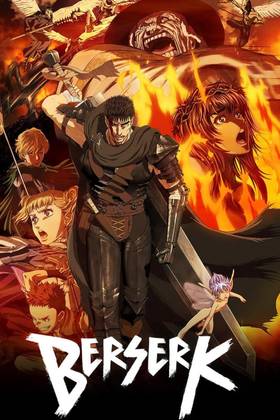
Berserk has already been animated on a number of occasions. First in 1997, when studio OLM tackled the Golden Age arc, then in a trilogy of films also covering the Golden Age arc, which was later repurposed into a TV series about the Golden Age arc. There’s a pattern there.
Berserk, beyond its Golden Age arc, has been adapted only once, in 2016, and it turned out to be a disaster condemned by fans and critics alike. The series has not been animated to completion, and after the backlash to the 2016 anime, it’s unlikely it ever will be.
.png?q=49&fit=crop&w=140&h=98&dpr=2)
We’re Sorry, But There Are 10 Awful Anime Series Out There Every Fan Needs to Watch
Bad anime can teach a very important lesson, and these “so bad it’s good” and “just bad” anime are all a must-watch—each one for a different reason.
Like Vagabond, Berserk‘s art is incredibly detailed, and any studio attempting to recreate it would have to deal with the consequences of doing so poorly. The series’ popularity speaks for itself, and though fans would want to see the series anime in full, it’s unlikely a studio would take the risk.
Blood on the Tracks
Written and Illustrated by Shuzo Oshimi, Published in Big Comic Superior

Shuzo Oshimi is one of the most successful and revered horror manga artists in the industry. Since 2009’s The Flowers of Evil put him on the map, Oshimi has written a number of highly psychological, deeply unsettling stories exploring very human evils. 2017’s Blood on the Tracks follows Seiichi Osabe, a child who suffered abuse at the hands of his mother for years.
Oshimi’s horror rarely ever dives into the supernatural. Instead, he has a knack for distorting characters’ faces and expressions in ways that are disturbing and stay with the reader long after they close their books.
Translating that horror into animation simply wouldn’t work well. Part of what makes Oshimi’s work so haunting is the medium of manga itself, with sudden page turns giving way to an unexpected horror. The Flowers of Evil was adapted in 2013, and its visuals are infamously divisive.
Goodnight Punpun
Written and Illustrated by Inio Asano, Published in Weekly Big Comics Spirit

Goodnight Punpun has earned itself a reputation in the years since its 2007 debut. The often disturbing coming-of-age drama series has scarred countless readers, drawing them in with a unique, if not whimsical, art style, only to follow main character Punpun Onodera down a bleak series of events that slowly break him.
Goodnight Punpun‘s final act is an unsettling test of its readers’ courage. To read through it all in one sitting is something not many manga fans can stomach. Casual anime fans likely wouldn’t be motivated to tune in, and with the reputation the series has as one of manga’s most difficult stories, there will be plenty of fans advocating for it to stick to the medium of manga.
Inio Asano’s artwork, like Vagabond and Berserk, is highly detailed and endlessly expressive, and recreating it on-screen will be a tough task for even the most talented of artists. After 2025’s Takopi’s Original Sin, anything is possible, but it’s unlikely Goodnight Punpun finds its way to screens almost two decades after its manga debut.
Goodbye, Eri
Written and Illustrated by Tatsuki Fujimoto, Published on Shōnen Jump Plus

Goodbye, Eri is a unique one-shot in several ways. Tatsuki Fujimoto, in-between Chainsaw Man Part One and Part Two, drew the story mostly from the point-of-view of a camera. While many might think the camera POV would translate well to TV, it isn’t quite that simple. The one-shot isn’t drawn to look like a movie, it’s drawn to look like the reader is looking through a camera.
The manga format allows for a unique experience in that regard, one that might not be all that simple to recreate. The drawn blur and several pages of entirely black panels make for a striking, memorable reading experience. With each page turn, the story feels like it’s coming to life.
Animated, the story would actually come to life, but it would lack that page-turning experience that makes the manga so unique. Look Back, Tatsuki Fujimoto’s other highly acclaimed one-shot manga, was successfully adapted in 2024, so a studio could make Goodbye, Eri work. But much of the story’s charm comes from
Nezumi’s First Love
Written and Illustrated by Riku Oseto, Published by Weekly Young Magazine

Mature content isn’t what stops most manga from being adapted. There are entire studios dedicated to the production of ‘mature’ anime, after all. However, when a manga contains mature content mixed with action and high-quality artwork, many of those smaller studios become no longer equipped to do the animating, while larger studios might be turned off by the mature content.
Nezumi’s First Love is a manga aimed at mature audiences that also boasts high-flying, over-the-top gory action. Which, unfortunately, makes it unlikely that a major studio would want to tackle it. Certain subjects might not fly in the usual time slots on TV, either.
Nevertheless, Nezumi’s First Love would work well as an anime series, with its endlessly entertaining action and likable cast of characters. The problem would be finding a studio willing to tackle it.
- Created by
-
Kentaro Miura, Kouji Mori
- First Film
-
Berserk: The Golden Age Arc 1: The Egg of the King
- Latest Film
-
Berserk: The Golden Age Arc 3: The Advent
- First TV Show
-
Berserk
- Latest TV Show
-
Berserk
Berserk is a dark fantasy manga series by Kentaro Miura, first published in 1989. Set in a medieval Europe-inspired world, it follows Guts, a lone mercenary, and his struggle against demonic forces after his betrayal by Griffith, leader of the Band of the Hawk. The franchise has expanded into multiple anime series, films, video games, and merchandise.